
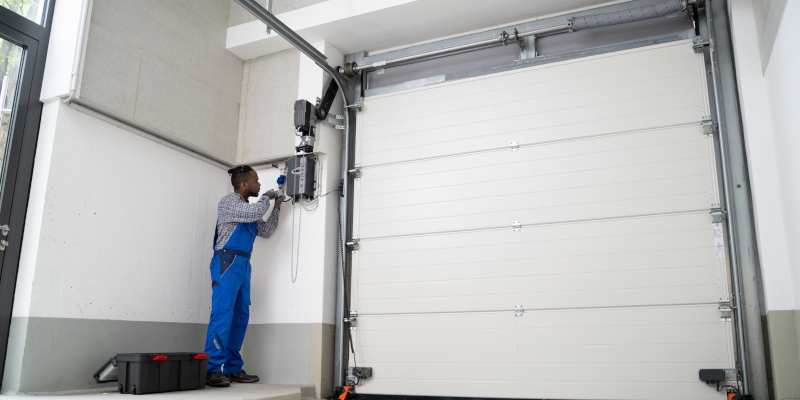
Business owners and facility managers across Jacksonville and Northeast Florida ask this question when budgeting for equipment replacement or deciding whether a repair is worth the cost. Commercial roll up doors do not have a single fixed lifespan. They have predictable factors that determine how long they last, and understanding those factors gives businesses real control over the return they get on a door installation. In our experience, the lifespan gap between a well-maintained commercial roll up door and a neglected one in Florida’s climate is significant enough to affect capital planning for facilities that depend on overhead door operation.
The Honest Answer: What to Expect From a Commercial Roll Up Door
A commercial roll up door that is properly installed, regularly maintained, and operating within its rated cycle capacity can realistically deliver 20 or more years of service. Doors that are overloaded or neglected reach the end of their practical service life considerably sooner, sometimes within eight to ten years on the same installation.
We have serviced commercial roll up doors in Jacksonville-area warehouses operating efficiently after more than two decades because the facility manager kept up with lubrication schedules and addressed small issues early. We have also replaced doors less than ten years old operated beyond their rated cycle capacity with no maintenance in place. The door was not the variable. The operation and maintenance were.
Commercial roll up doors are rated by cycle count, not by years. A heavy-use facility cycling a door fifty or more times per day reaches the same wear threshold as a light-use facility in a fraction of the time. A door rated for a certain number of cycles reaches that threshold in three years at a busy distribution center or fifteen years at a low-use storage facility. Cycle count and maintenance history are the true determinants of service life.
What Commercial Roll Up Doors Are Built to Handle
The curtain of a commercial roll up door is constructed from interlocking steel slats, typically two to three inches wide, that coil around a drum mounted above the opening. The spring system counterbalances curtain weight so the operator motor is not lifting the full load on every cycle. When springs are correctly sized and maintained, the operator handles only a fraction of that weight. When worn or improperly tensioned, the motor carries the full load on every cycle and both motor and curtain hardware accelerate toward failure.
The first sign of spring system failure on a commercial roll up door is usually a change in operator sound during the lift cycle. The motor labors audibly before any visible failure appears. Facility managers who recognize that sound and call for service early avoid the emergency repair that shuts down a loading dock during peak hours.
The Factors That Determine How Long a Commercial Roll Up Door Lasts
Installation Quality
A door installed with incorrect spring tension, misaligned drum brackets, or improperly secured track hardware starts its service life working against itself. Installation errors rarely surface immediately. They appear as accelerated wear within the first two to three years. We have traced problem units back to a drum bracket never fully secured during installation. Every cycle placed uneven load on the curtain, and the damage compounded quietly throughout.
Daily Cycle Volume
Cycle count is the primary engineering determinant of commercial roll up door service life. A door cycling fifty or more times per day at a distribution center can reach spring fatigue within five years. A similar door cycling three to five times per day in a low-use storage facility on the same property may still be on its original springs after fifteen years. When a door seems to be wearing out faster than expected, cycle volume is the first number we ask about.
Preventative Maintenance Consistency
Consistent lubrication of curtain slats, coil drum bearings, and spring hardware is the single most controllable factor in service life. We have responded to emergency calls where coil drum bearings had seized completely from lack of lubrication. When a drum bearing seizes, the operator motor absorbs the full rotational resistance on every cycle. Both bearing and motor required replacement simultaneously, and the bill was a multiple of what routine lubrication would have cost.
Florida’s Climate and Environmental Exposure
Northeast Florida’s coastal humidity, salt air, and year-round heat accelerate corrosion on steel curtain slats, spring hardware, and operator components faster than standard manufacturer maintenance schedules account for. In coastal installations like Jacksonville Beach, Atlantic Beach, and Fernandina Beach, salt air environments require more frequent lubrication than inland installations to achieve the same component protection. A door two blocks from the ocean operates in a fundamentally different environment than the same model ten miles inland.
Impact Damage and Overload Events
A single vehicle impact or a door cycled while partially obstructed can compromise slats, bend the bottom bar, or displace a drum bracket in ways that permanently reduce service life. We have inspected damage that looked minor from the outside but had displaced a drum bracket enough to place uneven load on the entire curtain during every subsequent cycle. That hidden damage compounds with every operation. A door that appears functional is quietly accumulating structural stress.
Signs a Commercial Roll Up Door Is Approaching the End of Its Service Life
Curtain Slats Showing Visible Corrosion or Deformation
Corroded or deformed slats compromise seal integrity and reduce structural capacity under load. Once corrosion is widespread rather than isolated, the curtain cannot distribute load evenly across the coil on every cycle.
Spring Replacements Happening More Frequently
Springs cycling to failure faster than their rated service life indicate the door is operating beyond its original specification, whether from higher cycle volume, an unbalanced curtain, or a drum no longer rotating freely.
Operator Motor Running Continuously or Straining Audibly
A motor that struggles on every cycle is compensating for a mechanical issue elsewhere in the system. It is signaling a problem with the springs, drum, or curtain before those components announce the failure directly.
Bottom Bar Seal No Longer Making Full Contact
A compromised bottom seal signals that curtain geometry has shifted from its original alignment, whether from slat deformation, a bent bottom bar, or track hardware that has moved over time.
Repair Costs Approaching Replacement Value
When repair costs reach thirty to forty percent of a new door installation, remaining service life rarely justifies the investment. That threshold is the clearest financial signal that replacement is the more practical decision.
How a Preventative Maintenance Program Extends Commercial Roll Up Door Life
We have seen the same door model reach fifteen years in one facility and eight in another. The difference was not the door. It was whether anyone had lubricated the drum bearings, inspected the bottom bar seal, checked spring tension annually, and addressed small issues before they became emergency calls.
A preventative maintenance program covers lubrication of curtain slats and drum bearings, spring tension inspection, bottom bar seal check, operator motor test under load, track alignment verification, and a cycle test to identify changes in speed or sound that signal developing wear. Each check maps to a specific failure mode that costs a fraction to address early versus after failure.
Coil drum bearings require a heavy-duty grease rated for the operating temperature of the installation environment. In Florida’s year-round heat, bearing grease that performs adequately in cooler climates breaks down faster, meaning the protection interval is shorter than a standard national maintenance schedule indicates.
When Repair Makes Sense and When Replacement Is the Right Call
A single isolated component failure on an otherwise well-maintained system is a strong repair candidate. Multiple simultaneous failures across different components signal systemic wear, and each repair is delaying a replacement rather than extending service life.
The clearest field signal that a door has reached the end of its practical service life is when the repair required to restore safe operation costs more than thirty to forty percent of a new installation. At that threshold, remaining service life rarely justifies the investment compared to a properly installed replacement with a full service life ahead of it.
Schedule a Professional Assessment for Your Commercial Roll Up Doors
A commercial roll up door closing every night on a warehouse full of inventory is not a component to evaluate based on guesswork. The difference between a door with years of life remaining and one approaching the end is visible to a trained technician during a professional inspection and invisible to a facility manager doing a visual check from the floor.
Overhead Door Company of Jacksonville services commercial roll up doors across the Jacksonville area including warehouse and distribution facilities, retail loading areas, and industrial properties throughout Duval, St. Johns, Clay, and Nassau Counties. Our team carries parts for common repairs, offers preventative maintenance programs that have extended client door life well past expected service timelines, and provides honest repair-versus-replacement assessments. When a commercial door shows signs of wear, a professional evaluation before failure is always the less expensive decision.