
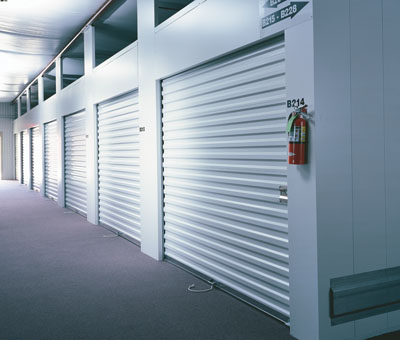
The repair-versus-replacement decision on a commercial overhead door is almost always made under pressure after something has already failed. Businesses across Jacksonville and Northeast Florida that depend on commercial overhead doors daily cannot afford to make that call without a clear picture of what the door’s condition actually tells them. Understanding the signs that a door has reached the end of its practical service life before a failure occurs gives a facility time to plan a replacement rather than react to one. In our experience, facility managers who make the best replacement decisions recognize the pattern building in their door before the door makes the decision for them.
Why the Repair vs. Replacement Decision Carries More Weight for Commercial Doors
A commercial overhead door is not a convenience. It is an operational asset that supports secure access and daily workflow. When it fails, the disruption goes beyond the repair cost. It affects the operation connected to it.
We have seen facilities continue repairing a commercial overhead door through multiple service calls within a single year, each on a different component, before the cumulative cost made the replacement conversation unavoidable. At that point the business had already spent a significant portion of what a replacement would have cost and still had a door approaching failure on several fronts. Commercial overhead doors in warehouse and distribution environments operate under significantly higher cycle loads than residential doors. The wear that accumulates on structural components, hinges, tracks, and panels does not reverse with individual part repair. It continues across the entire door system at once, and recognizing that pattern early is what separates a planned replacement from an emergency one.
Frequent Breakdowns Across Different Components
When a commercial overhead door has needed service multiple times within twelve months and each visit addresses a different component, that pattern is one of the clearest signals that the door has moved past its cost-effective repair window. Routine inspections are recommended to help prevent downtime and extend door lifespan, and they often surface this pattern before it becomes a series of emergency calls.
A panel that deforms under impact, a spring that cycles to failure ahead of its rated life, and a track bracket that separates from the wall all tell the same story when they happen on the same door within a single year. The door is not experiencing isolated failures. It is wearing out across the board, and each repair buys a shorter window of reliable operation than the one before it.
A commercial overhead door operates as an integrated mechanical system. When one component begins failing ahead of schedule, the surrounding components sharing that load are typically at the same stage of wear. Repairing the one that failed most recently does not address what comes next.
Structural Damage That Affects Operation or Safety
Structural damage is a replacement indicator that is easy to underestimate when the door is still moving after the event. Vehicle impacts, forklift strikes, and loading accidents can alter the mechanical geometry of a commercial overhead door in ways that are not visible from a casual inspection but affect every cycle the door completes afterward.
We have inspected commercial overhead doors after vehicle impacts where visible damage appeared limited to one or two panels near the bottom. The impact had displaced the bottom roller brackets enough to place uneven load on the entire panel stack during every subsequent cycle. The door was still operating, but the structural geometry of the curtain had shifted in ways that were accelerating wear on every panel above the damaged section. Repairing the visible damage addressed the symptom. It did not address what the impact had done to the door’s load distribution.
Commercial overhead door panels are engineered to distribute the door’s weight evenly across the panel stack and through the track and hinge system. When structural damage shifts that load distribution, mechanical stress concentrates on components not designed to carry it. A door that continues operating under those conditions is not operating safely, even when it appears normal.
Declining Performance That Maintenance Cannot Correct
Performance decline on a commercial overhead door rarely happens all at once. It develops gradually, and because the door is still moving, the deterioration often goes unaddressed until the performance gap becomes impossible to ignore or a failure makes it irrelevant.
We have assessed commercial overhead doors taking significantly longer to complete a cycle than they should, with a visible gap at one side of the floor because the panel geometry had shifted over years of high-cycle operation. Neither condition was correctable through component repair. The door’s mechanical baseline had changed in ways no individual part replacement could reverse.
The travel speed, floor seal, and side seal performance of a commercial overhead door depend on the structural integrity of the panel sections, the track system, and the spring assembly working together. When any of those elements degrades past a recoverable threshold, the performance decline becomes a permanent feature of that door. Frequent breakdowns, structural damage, and declining performance are all conditions that may indicate replacement is more cost effective than continued repair.
Repair Costs Approaching or Exceeding Replacement Value
The financial case for replacement becomes clearest when repair costs are evaluated over a rolling period rather than as individual service calls. A pattern of repairs on the same door, each addressing a different component over the course of a year, is a different calculation than a single targeted repair.
We have walked through that calculation with facility managers who were surprised to find their cumulative repair spend over twelve months had already reached a meaningful percentage of a full door replacement. In those situations, the door still had multiple developing issues visible during each service visit. The business was not getting reliable operation in return for what it was spending. It was paying to delay an outcome already clear to anyone who had assessed the door’s full condition.
Replacement cost includes not just the door itself but proper installation, track and hardware fitting, balance verification, and safety testing. A repair decision made without accounting for the door’s remaining service life against that full replacement cost is an incomplete comparison. When the math no longer favors repair, continuing to repair is not a conservative choice. It is a more expensive one.
The Door No Longer Meets Current Safety or Operational Requirements
A commercial overhead door can be mechanically operable and still be the wrong door for the facility. Changes in how a business uses an opening or in what the application requires can create a mismatch that repair cannot resolve.
We have assessed commercial overhead doors original to buildings constructed decades earlier that were still mechanically functional but no longer appropriate for the way the facility used the opening. A facility that had shifted from light freight to heavy equipment cycles, or that needed a different door size, insulation specification, or fire rating, had a door that no longer fit the application regardless of its mechanical condition. Repairing a mismatched door does not resolve the mismatch.
Commercial overhead doors are specified for particular applications including cycle capacity, wind load resistance, and insulation and fire ratings where applicable. A door correctly specified for one use may be inadequate for a changed use, and that inadequacy affects performance, safety, and operating costs regardless of how recently the door was last serviced.
Age Combined With Deferred Maintenance
A commercial overhead door that has operated for years without a consistent maintenance program presents a different picture than one of the same age that has been regularly serviced. Routine inspections are recommended to help prevent downtime and extend door lifespan, and their absence over an extended period has a measurable effect on every component in the system.
A door that has run for years without consistent maintenance has accumulated wear across springs, rollers, tracks, hinges, and hardware at a rate regular service would have slowed. By the time it presents for assessment, the number of components approaching failure simultaneously makes repair economics unfavorable regardless of which component triggered the call. The question is not whether those components will fail. It is which one fails first and how much surrounding hardware it takes with it.
What a Professional Assessment Should Cover
A facility manager looking at a commercial overhead door from the floor can identify obvious issues but cannot assess spring tension degradation, track alignment deviation, hinge wear, or panel condition without disconnecting the operator and evaluating the door manually.
The assessment that supports a sound replacement decision is a hands-on technical inspection covering the full door system, not just the component that prompted the call. Spring condition, panel integrity, track alignment, hardware torque, and operator performance all factor into whether the door has reached the end of its practical service life or whether targeted repair can extend it meaningfully. That picture is not available from a visual check or a repair estimate focused only on the reported symptom.
Schedule a Commercial Overhead Door Assessment in Jacksonville
When a commercial overhead door is showing the signs described in this article, a professional assessment that evaluates the full system is the most useful next step. Overhead Door Company of Jacksonville provides commercial overhead door installation, replacement, repair, and preventative maintenance for commercial properties throughout Jacksonville and Northeast Florida. Emergency service is available when urgent issues affect safety or operations. Reach out to schedule an assessment and get an accurate picture of where your door stands before the decision is made for you.